VR Labs: The New Frontier in Science Education
How Virtual Reality is revolutionizing laboratory experiments, making science more accessible and engaging than ever before.

Dr. Amira Patel
HCI Specialist
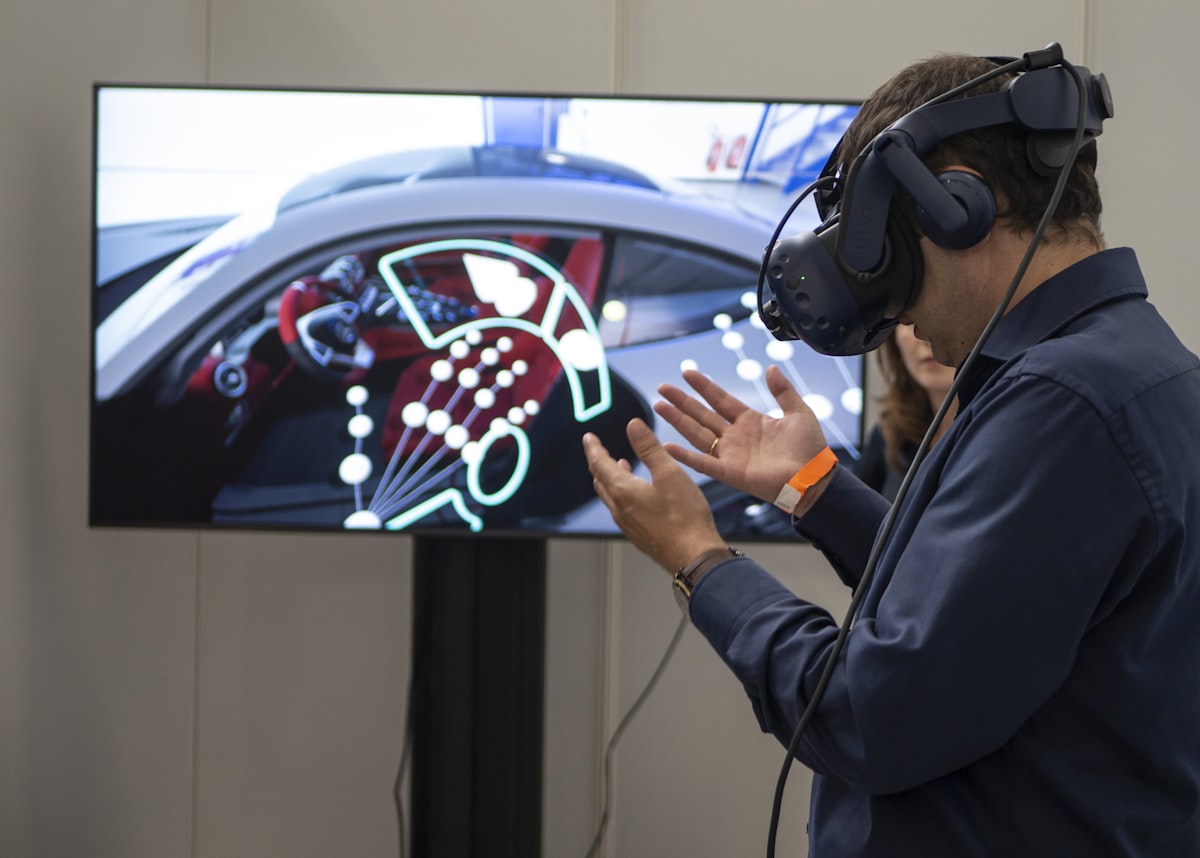
VR allows students to visit places physically impossible to reach—like the surface of Mars or the inside of a human cell.
The traditional science laboratory, with its test tubes, microscopes, and Bunsen burners, is undergoing a digital transformation. Virtual Reality (VR) is stepping out of the gaming world and into the classroom, offering students a safe, cost-effective, and highly immersive way to conduct complex scientific experiments.
Breaking the Physical Barriers
One of the most compelling advantages of VR labs is their ability to transcend the limitations of physical space and resources.
- Access to Rare Equipment: Not every school can afford a scanning electron microscope or a particle accelerator. In VR, every student can have access to high-end virtual versions of this equipment.
- Safety First: VR allows students to perform potentially dangerous chemical reactions or handle hazardous materials without any risk of physical harm.
- Repeatable Experiments: In a physical lab, a mistake might mean starting over with new materials. In VR, students can reset an experiment with the click of a button, allowing for trial-and-error learning without waste.
Zero risk of chemical spills or lab accidents makes VR an ideal training ground for beginners.
Immersive Learning Experiences
VR labs go beyond simple simulations; they provide an immersive environment that can enhance a student's understanding of abstract concepts.
- Scaling the Micro and Macro: VR can transport students inside a human cell or to the far reaches of a distant galaxy, allowing them to visualize and interact with scales that are impossible to experience in person.
- Gamified Learning: By incorporating elements of gamification, VR labs can make science more engaging and fun, increasing student motivation and retention.
- Collaborative Virtual Spaces: Students from around the world can meet in a shared virtual laboratory to work together on projects, fostering international collaboration and communication.
The Future of the Laboratory
While VR labs are unlikely to completely replace physical laboratories, they are becoming an increasingly important tool in the educator's toolkit. The hybrid model—combining the hands-on experience of a physical lab with the flexibility and power of VR—offers the best of both worlds.
As VR technology continues to improve and become more affordable, we can expect to see even more innovative applications in science education, from virtual field trips to distant ecosystems to interactive anatomical dissections.
Conclusion
VR labs are more than just a novelty; they are a powerful educational tool that can democratize access to high-quality science education. By embracing these technologies, we can inspire the next generation of scientists and researchers to explore the wonders of the natural world in ways we never thought possible.
Dr. Amira Patel
HCI Specialist
Focuses on Human-Computer Interaction and Accessibility. Advocate for inclusive design.
View Full ProfileRelated Posts
AI in the Classroom: Transforming Modern Education
Explore how Artificial Intelligence is reshaping the learning experience, from personalized tutoring to automated grading and beyond.